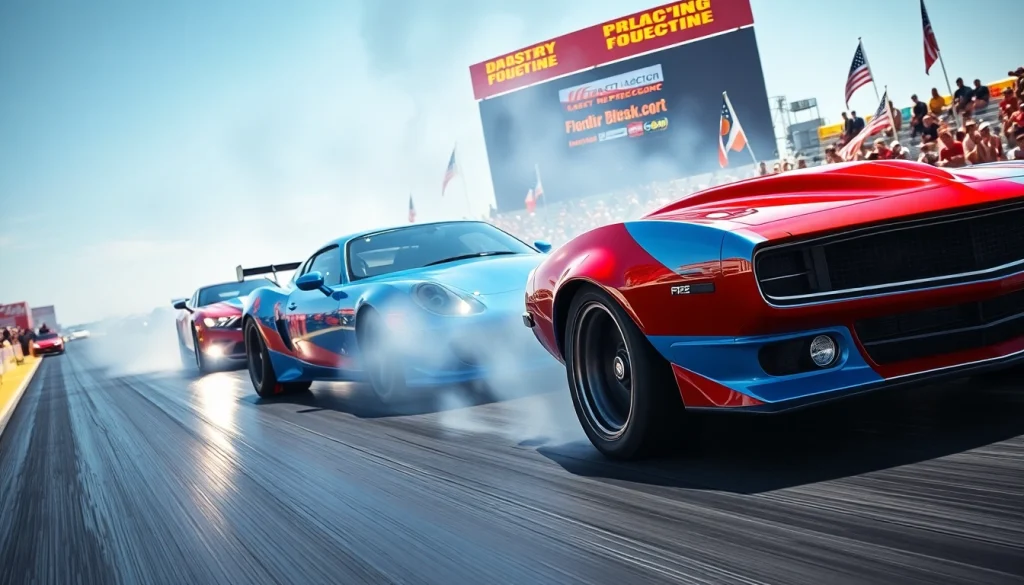
Introduction to Drag Racing
Drag racing is a thrilling motorsport that has captured the hearts of automotive enthusiasts worldwide. At its core, drag racing involves a competition between two vehicles, typically automobiles or motorcycles, racing down a straight track to see who can reach the finish line first. The sport combines speed, precision, and strategy, making it a unique pastime cherished by many. For those looking to delve into the world of Drag Racing, there’s a lot to learn about its history, mechanics, and the vibrant community that surrounds it.
What is Drag Racing?
Drag racing is an acceleration contest that occurs on a dedicated track or dragstrip, useful for conducting races without the risks associated with street racing. The format usually requires two participants racing head-to-head from a standing start, often covering a distance of a quarter-mile (400 meters). Races are typically timed, and the winner is determined by the vehicle that crosses the finish line first. Participants often modify their vehicles to enhance speed and performance, making the sport not just a test of driving skill but also of engineering prowess.
The History of Drag Racing
The origins of drag racing can be traced back to the post-World War II era when returning soldiers brought back a passion for automotive performance. Initially informal, these races occurred on public roads and deserted airstrips, showcasing the burgeoning American car culture. The first organized drag racing event took place in 1950 at the Santa Barbara Airport in California, marking the inception of a sport that would grow into a national phenomenon. Over the decades, organizations like the National Hot Rod Association (NHRA), founded in 1951, established rules and safety standards, lending much-needed structure to the sport.
Types of Drag Racing Events
Drag racing events can vary widely, from amateur races held at local tracks to professional competitions like the NHRA Drag Racing Series. Below are some of the popular types of drag racing events:
- Brackets Racing: This format allows vehicles of different speeds to compete against each other by matching them in classes. The slower car gets a head start, making it possible for anyone to win.
- Heads-Up Racing: This is a direct race between two vehicles without any handicap. The fastest car wins, making it a true test of speed and skill.
- No Prep Racing: Races where the track surface isn’t prepped for optimal grip, adding an element of unpredictability.
- Street Racing: Often held illegally on public roads, street racing attracts thrill-seekers and showcases vehicle modifications but poses significant safety risks.
Understanding the Mechanics of Drag Racing
How Drag Racing Works
The mechanics of drag racing are straightforward yet sophisticated. Each race begins with both drivers starting from a designated point, typically marked by a Christmas tree light system. As the lights turn from yellow to green, the race begins. Timing devices measure how quickly each vehicle accelerates down the strip, typically culminating in a quarter-mile race, although shorter distances are also common in various events.
Key Equipment Used in Drag Racing
Several key components are integral to the success of drag racing:
- The Dragstrip: A specialized track designed for drag racing with safety barriers and precise measurements.
- Timing Systems: Precise equipment that records the speed and time taken to cross the finish line, crucial for determining race outcomes.
- Race Cars: Custom-built vehicles designed for speed, often outfitted with specialized tires, engines, and safety equipment.
- Safety Gear: This includes helmets, fire suits, and harnesses, which are mandatory for drivers to ensure their safety during high-speed runs.
Technology Innovations Shaping the Sport
As technology evolves, so does drag racing, with advancements ushering in new capabilities and enhancements. Modern drag racers often rely on:
- Data Logging: This technology helps teams analyze vehicle performance, making real-time adjustments to optimize speed during races.
- Engine Management Systems: Advanced electronics allow for dynamic tuning and performance adjustments on-the-fly, enhancing speed and efficiency.
- Telemetry: This is used to gather data from the vehicle during runs, providing insights that help teams strategize and improve performance.
The Drivers Behind the Wheel
Meet the Top Drag Racing Drivers
Winning at drag racing requires not only a high-performance vehicle but also exceptional driving skills. Top drivers like John Force, Tony Schumacher, and Leah Pruett have become household names through their achievements. They demonstrate skill, precision, and a thorough understanding of vehicle dynamics and race strategy. These professionals dedicate countless hours to practice and tuning, contributing to their competitive edge.
Driver Skills and Techniques
Successful drag racing drivers exhibit various skills, including:
- Reaction Time: Quick reflexes are essential for launching off the starting line. A millisecond can determine the outcome of the race.
- Vehicle Control: Managing the power and traction of the vehicle is crucial, especially during acceleration.
- Race Strategy: Understanding the track conditions and competitor capabilities can provide drivers an advantage in races.
The Role of Sponsorship in a Driver’s Career
Sponsorships are vital in professional drag racing, providing the financial backing necessary for teams to function. Sponsors not only help with vehicle costs, including parts and maintenance, but also contribute to the overall race experience through marketing and promotional activities. A strong relationship with sponsors can significantly propel a driver’s career while offering immense visibility for brands involved.
Getting Started in Drag Racing
Beginner Tips for Aspiring Drag Racers
For those looking to delve into drag racing, here are some valuable tips:
- Start Small: Begin with your daily driver or a street-legal car. This lets you familiarize yourself with track conditions.
- Understand the Rules: Familiarize yourself with the regulations of local tracks to ensure compliance and safety.
- Join a Community: Engaging with local racers or forums can provide insights and mentorship opportunities.
Essential Gear for Drag Racing
Safety is paramount in drag racing, and thus, the following gear should always be prioritized:
- Helmet: A high-quality helmet is critical to protect against head injuries.
- Fire Suit: This safeguards you if a fire occurs during racing.
- Gloves & Shoes: Protect your extremities and enhance grip while driving.
Finding Local Drag Racing Tracks
Research local tracks in your area and attend races to gain better insights. Websites and community boards often publish schedules and events that can connect new racers with existing drag racing communities and competitions. Most tracks will have introductory events where newcomers can safely learn the ropes and experience the thrill firsthand.
Community and Culture of Drag Racing
Drag Racing Events to Attend
Beyond the races, the drag racing community hosts numerous events, including car shows, meet-and-greets with professional drivers, and instructional sessions. These events can enhance understanding and provide networking opportunities. Notable events to consider attending include:
- NHRA Nationals: A premier event showcasing top talent and state-of-the-art vehicles.
- Local Track Days: Allow for hands-on experience with coaching from seasoned racers.
- Car Shows: Often organized alongside racing events, these allow enthusiasts to showcase modifications and meet other fans.
The Social Impact of Drag Racing
Drag racing has substantially influenced automotive culture, contributing to advancements in engineering and safety technology. The community fosters camaraderie among enthusiasts, empowering networking and partnership opportunities. The sport also serves as a platform for promoting local businesses, as many enthusiasts engage in local shops and aftermarket services. Community-led initiatives, such as charity races, illustrate the positive impact of drag racing in the larger social fabric.
Future Trends in Drag Racing
As technology progresses, several trends are emerging in drag racing. Electric drag racing is gaining momentum, with cars designed to challenge traditional combustion engines in speed and performance. Additionally, advancements in aerodynamics, lightweight materials, and engine efficiency promise to revolutionize the competitive landscape. The growing popularity of hybrid models suggests that drag racing could see a diversification in vehicle types, providing new challenges and responses within the sport.